17th August 2026
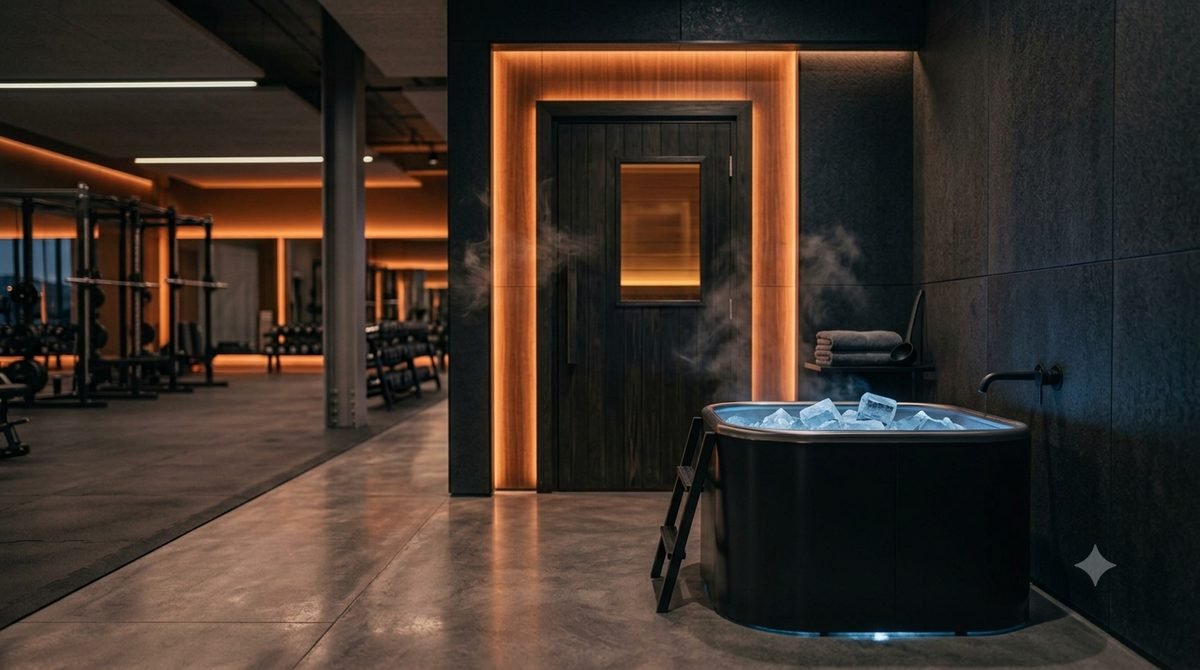
TL;DR: Contrast therapy means alternating heat and cold, usually a sauna or steam session followed by an ice plunge. Research consistently points to real benefits for perceived soreness, relaxation and readiness to train again, while the evidence for long term adaptation is still developing. The practical value is that it helps you feel better sooner, sleep more easily and stay consistent with training. At Fitness Extreme, the recovery suite pairs steam and sauna with an ice plunge, red light therapy and deep tissue work, so you can finish a session properly instead of walking out stiff.
Contrast therapy is simple in structure and often overcomplicated in conversation. You expose your body to heat, then to cold, then usually back to heat, and you repeat that cycle a small number of times. The heat comes from a sauna or a steam room. The cold comes from an ice plunge or a cold shower. That is the whole method.
The reason it gets so much attention is that both halves do something on their own. Heat increases blood flow to the skin and working muscle, relaxes tight tissue and gives the nervous system a strong signal to downshift. Cold does close to the opposite at the surface, narrowing blood vessels and dulling the sensation of soreness. Alternating the two creates a pumping effect through the circulatory system, and many people find that combination leaves them feeling looser and clearer than either one alone.
What contrast therapy is not is a replacement for the basics. Sleep, food and sensible training load still do the heavy lifting in recovery. Think of the recovery suite as the layer you add once those are broadly in place, not the thing that rescues a week of four hours of sleep a night.
Be careful with claims here, because the field moves fast and the headlines run ahead of the data. Research consistently points to cold water immersion reducing perceived muscle soreness in the days after hard training, and to sauna use being well tolerated and associated with a strong relaxation response. Those are reasonable, modest, useful findings.
Where things get less certain is the long game. Some work suggests that heavy cold exposure straight after resistance training may blunt part of the muscle building signal, which is why the timing advice below matters. Evidence for red light therapy is promising but still developing, and it should be treated as a supportive tool rather than a proven treatment. None of this is medical care. If you have a cardiovascular condition, are pregnant, are managing blood pressure issues or are recovering from an injury or surgery, speak to your doctor before using heat or cold protocols at all.
The honest summary is that contrast therapy is a strong tool for how you feel and how consistently you train, and a still emerging one for adaptation. That is a good enough reason to use it well.
Timing is where most people get contrast therapy wrong. If your session was a hard strength block and the goal is muscle growth, leave a gap before you get into the ice plunge. A few hours is a sensible buffer, or use the plunge on a rest day instead. If your session was conditioning, a long class, or a sport where the priority is being ready to perform again tomorrow, cold soon after is far more defensible.
Sauna is more forgiving. Post workout heat is generally comfortable and easy to slot in, though you should be well hydrated before you start and rehydrate afterwards. Mumbai humidity means you often arrive at the gym already carrying some fluid loss, so do not treat that step as optional.
For anyone training in the evening after a full workday, the practical version is straightforward. Train, shower, sauna, one or two short plunges, then home. Many members find this makes falling asleep noticeably easier, which is arguably the most valuable recovery outcome of all.
The best protocol is the one you will do twice a week for a year, not the extreme one you abandon after ten days. Start conservative with the cold. Thirty to sixty seconds is plenty at first, and the goal is controlled breathing rather than gritted teeth. If you are gasping and tensing your shoulders around your ears, the water is doing less for you than a shorter, calmer exposure would.
Build the heat side slowly too. A first sauna session of eight to ten minutes tells you a lot about your tolerance. You can extend from there across a few weeks.
Recovery is only useful in proportion to the training it supports. At our gym in Andheri West Mumbai, the recovery suite sits alongside a strength and free weights floor, cardio zones, GroupX classes and personal training, so the whole week hangs together rather than existing as separate habits.
That matters for people training around demanding jobs. If you lift heavy on Tuesday, take a GroupX class on Thursday and work long hours in between, the recovery suite is what keeps Saturday’s session from being a write off. Steam and sauna, an ice plunge, red light therapy and deep tissue work all live in the same space, which removes the friction of driving somewhere else for it.
Three groups tend to get the clearest return. First, people training hard four or more days a week, where soreness genuinely limits the next session. Second, desk based professionals carrying chronic tension through the neck, shoulders and hips, who often respond well to the heat side in particular. Third, anyone whose sleep quality is poor and who needs a reliable way to signal the end of the day to their nervous system.
If you fall into none of those groups, contrast therapy is still pleasant and still worth trying. Just keep the expectations proportionate. It supports training. It does not substitute for it.
Come in, do a normal session, then spend twenty minutes in the recovery suite. Take the sauna first and keep the plunge short. Notice how you sleep that night and how your legs feel the next morning. That two point check is more useful than any protocol you read online, because it is measured on you.
If you are unsure how to fit recovery around your specific training week, a coach can map it out in a few minutes. Serving Lokhandwala, Versova, Oshiwara and Juhu, we see a lot of people training around unpredictable schedules, and the plan usually needs to bend around real life rather than the other way around.
Book a free trial at Fitness Extreme, Andheri West. Fill in the enquiry form on our contact page, WhatsApp us, or call +91 89283 44231. If you want a walkthrough of the whole protocol in person, ask about advanced recovery and wellness in Andheri West.